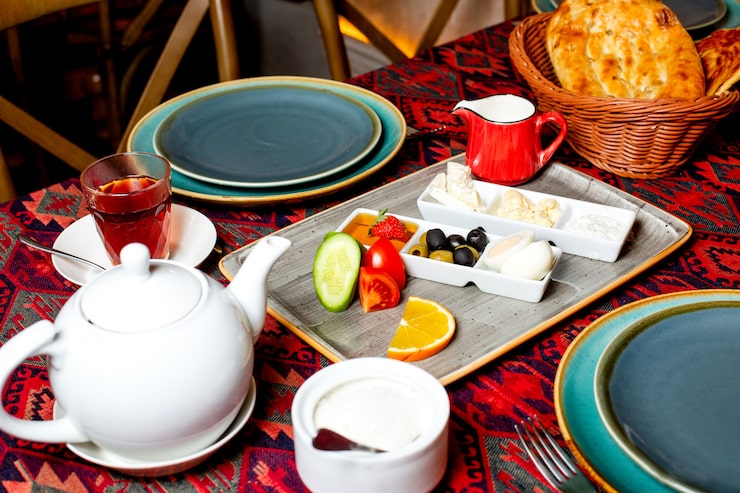
The consumer goods and household retail sector in Pakistan is navigating a dynamic economic environment as of April 2026. For institutional investors and retail stakeholders, monitoring the dinner set price in Pakistan has become a vital metric for assessing domestic trade health. As the primary wedding and gifting season reaches its peak this spring, the market is seeing a massive influx of new inventory. Analysts observe that industrial manufacturing clusters in Punjab are currently adjusting their wholesale benchmarks. These adjustments are a response to shifting energy tariffs and the cost of imported raw materials. In 2026, the retail industry is prioritizing “Value Engineering.” This strategy allows brands to offer high-aesthetic products while maintaining price points that appeal to the mass-market demographic. This report provides a comprehensive deep-dive into current pricing tiers, brand competition, and the logistics driving the tableware industry.
1. Macro-Economic Factors Influencing 2026 Pricing
The commercial valuation of dinnerware in the Pakistani market is no longer static. Several industrial variables are dictating how retail prices are set at the start of this fiscal quarter.
Industrial Energy Costs and Manufacturing Stability The primary driver of the dinner set price in Pakistan in 2026 is the overhead cost of industrial kilns. Ceramics and porcelain production require consistent high-temperature firing. In April 2026, the government’s shift toward a “Smart Grid” has introduced varying industrial power rates. Larger manufacturers who have invested in hybrid solar-gas kilns are currently showing the most price stability. Smaller units that rely solely on grid electricity are facing higher production costs, leading to a slight increase in their wholesale prices.
Logistics and National Supply Chain Efficiency The expansion of the national motorway network has significantly improved the “Time-to-Market” for fragile goods. In 2026, logistics companies have introduced “Safe-Transit” insurance modules for bulk dinnerware shipments. This has reduced the “Breakage Loss” factor, which previously added 3-5% to the final retail price. Improved transport efficiency between the manufacturing hubs of Gujranwala and the retail centers of Karachi is helping keep the market competitive.
2. Market Segmentation: 2026 Commercial Price Benchmarks
To navigate the 2026 retail landscape, it is essential to categorize products by their material grade and commercial durability. Below are the verified market averages for April 2026.
Melamine Segment (High-Volume Retail)
Melamine continues to dominate the mass-market retail sector due to its durability and low replacement cost.
-
24-Piece Economy Series: Rs. 13,800 – Rs. 17,500
-
72-Piece Full Household Set: Rs. 33,500 – Rs. 48,000
-
96-Piece Commercial/Event Collection: Rs. 60,000 – Rs. 82,000
Opalware & Tempered Glass (The Mid-Market Hub)
Opalware has seen a 12% year-on-year growth in 2026, capturing the “Modern Household” segment.
-
24-Piece Standard Series: Rs. 18,500 – Rs. 27,500
-
42-Piece Family Bundle: Rs. 44,500 – Rs. 68,000
-
72-Piece Executive Collection: Rs. 70,000 – Rs. 92,000
Fine Bone China & Porcelain (Premium Asset Class)
This tier is less sensitive to daily inflation and is primarily driven by brand prestige and artisanal craftsmanship.
-
61-Piece Porcelain Set: Rs. 62,000 – Rs. 105,000
-
85-Piece Luxury Bone China: Rs. 135,000 – Rs. 295,000
-
102-Piece Designer Gold Series: Rs. 320,000 – Rs. 500,000
3. Brand Authority and Competitive Positioning
The 2026 market is led by brands that have successfully balanced “Quality Perception” with “Commercial Realism.“
Graceware (The Industrial Scale Leader) Graceware remains the dominant player in the melamine sector. Their 2026 business model relies on “Design Replication.” They offer the aesthetic appeal of Italian porcelain in durable, low-cost melamine. This has made them the primary choice for the commercial catering industry.
Onesto (The Premium Tech Innovator) Onesto’s 2026 collection focuses on “Material Integrity.” Their porcelain is engineered to be 30% more chip-resistant than standard ceramics. From a business standpoint, this allows them to justify a higher dinner set price in Pakistan by offering a lower “Cost-per-Use” over time.
Luminarc (The Global Import Standard) While local production is growing, Luminarc remains the benchmark for tempered glass. Their 2026 strategy involves “Global Scale Economies.” This allows them to offer imported quality at prices that compete directly with local premium manufacturers.
4. Regional Price Variance: A Geographic Market Map
Retail prices are not uniform across the country. 2026 data shows significant regional variations based on logistics and buyer demographics.
-
The Manufacturing Triangle (Gujranwala, Lahore): These cities enjoy the lowest dinner set price in Pakistan due to proximity to factories. Most retailers here offer “Factory-Direct” pricing, saving consumers the standard 15% retail markup.
-
The Southern Commercial Hub (Karachi): As the primary import gateway, Karachi offers the best deals on international luxury brands. However, local Punjab-made sets are slightly more expensive here due to long-haul trucking overheads.
-
The Northern Frontier (Islamabad, Rawalpindi): These markets report a “Premium Markup” of 5-10%. This is due to higher purchasing power and the added logistics of regional transport.
5. The “Wedding Season” Impact on Retail Revenue
The “Shaadi Season” in Pakistan is a massive economic driver. In April 2026, retailers have introduced “Inventory Locking” schemes. This allows families to purchase dinnerware at current rates and take delivery later. This serves as a hedge against any potential currency fluctuations. Business analysts note that “Combo-Deals” now account for 55% of all high-value retail transactions.
6. Digital Commerce and E-Retail Growth
The business of selling home goods has undergone a digital shift in 2026.
-
B2B E-Commerce Portals: Wholesalers are now using mobile apps to manage orders from rural retailers. This has reduced the “Intermediary Cost,” helping to keep the final dinner set price in Pakistan manageable for the rural consumer.
-
Social Commerce Expansion: Instagram and TikTok shops have become primary sales channels for designer dinnerware. Brands are using “Influencer Partnerships” to drive high-velocity sales of limited-edition sets.
7. Quality Standards for Institutional Procurement
For B2B buyers in the hospitality industry, the 2026 quality standards are rigorous.
-
Glaze Integrity Audit: Professional buyers use specialized tools to check for micro-cracks in the glaze. This is a critical factor for hygiene in the restaurant sector.
-
Stackability Metrics: Modern 2026 designs focus on ultra-stackable shapes. This saves up to 20% more space in commercial storage, providing a better “Utility-to-Space” ratio.
-
Thermal Shock Resistance: Premium porcelain sets are now tested to withstand temperature shifts of 200°C. This ensures they are safe for modern commercial ovens and dishwashers.
8. Wholesale Strategies for Retail Investors
Investors looking at the Pakistani retail space should focus on the “Middle-Tier” Opalware segment. This category offers the best balance of profit margin and sales velocity. While the dinner set price in Pakistan for luxury bone china offers higher margins per unit, the turnover in the mid-range sector is five times higher.
9. Sustainability as a Commercial Value
By late 2026, “Eco-Premium” is expected to be a major trend in the tableware industry.
-
Recycled Ceramic Dust: Innovative factories are now using recycled ceramic waste to create “Eco-Sets.” These are marketed at a 20% premium to eco-conscious urban consumers.
-
Biodegradable Packaging: To lower the environmental footprint, top-tier brands have moved to 100% plastic-free corrugated packaging. This has improved “Brand Equity” among the Gen-Z demographic.
10. Market Forecast: Q3 and Q4 2026
Predictions for the remainder of the year suggest a period of consolidation. We do not expect major price drops. However, we do expect a “Feature War” where brands will offer more accessories (like matching soup tureens) within the same price bracket to win market share.
11. Conclusion: The Strategic Value of Tableware Assets
In conclusion, the dinner set price in Pakistan in April 2026 reflects a sophisticated and multi-layered economy. The market has matured beyond simple aesthetics into a battleground of industrial efficiency and strategic logistics. For the corporate buyer and the household consumer alike, the opportunity lies in understanding these market dynamics. Buying a dinner set is no longer a simple purchase; it is an investment in a durable asset that reflects institutional or personal status. With the rise of domestic manufacturing and the integration of digital sales tools, the Pakistani consumer has more power and information than ever before.
Also Read: How Tile Size Changes the Perception of Room Space.