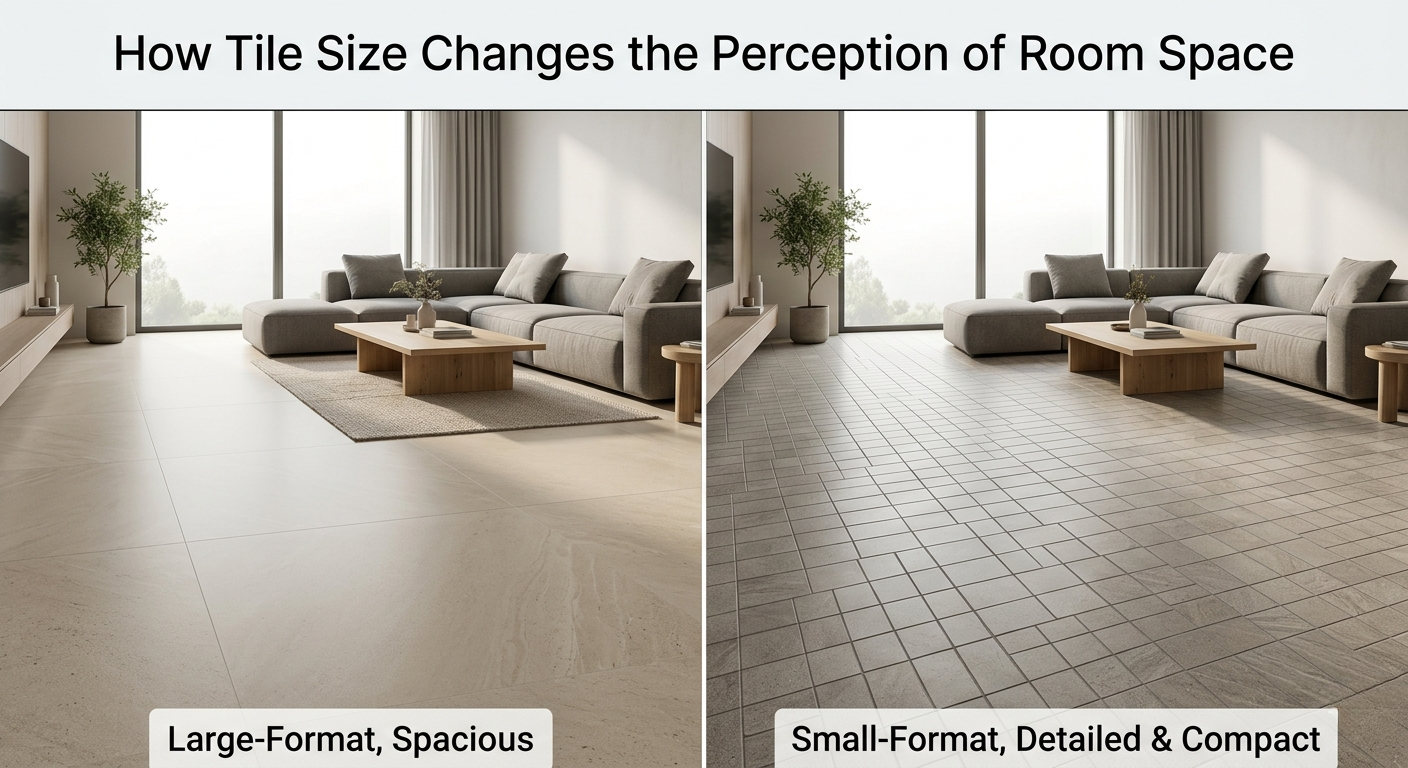
Tile size plays a crucial role in shaping how a room looks and feels. While many homeowners focus on color and finish, the size of the tile directly influences visual space, flow, and overall design impact. A well-chosen tile size can make a small room feel larger or help define structure in a bigger space.
In modern interiors, designers often experiment with large formats sourced from an 800×1600 porcelain tiles manufacturer in Iraq to create seamless surfaces. At the same time, balanced formats such as those offered by a 1200×1200 porcelain tiles manufacturer are widely used for both residential and commercial applications.
Why Tile Size Matters in Interior Design
Every visual element contributes to how space is perceived. Tile size affects:
- Proportion of the room
- Visual continuity
- Perception of openness
- Overall layout balance
Larger tiles create fewer interruptions, while smaller tiles introduce more visual detail. Because of this, choosing the right size is essential for achieving the desired effect.
How Large Tiles Make a Room Look Bigger
Large tiles are widely used because they enhance spatial perception. In many cases, they make rooms appear larger than they actually are.
Fewer Grout Lines Create Continuity
When using large-format tiles, there are fewer grout lines. As a result, the surface looks more continuous and less fragmented. This helps the eye move smoothly across the space.
For example, tiles sourced from an 800×1600 porcelain tiles manufacturer in Iraq are often used in living rooms to create a clean and uninterrupted look.
Visual Expansion Effect
Large tiles reduce visual clutter. Therefore, they create a sense of openness. This is especially useful in apartments or compact homes where maximizing perceived space is important.
Ideal Spaces for Large Tiles
- Living rooms
- Bedrooms
- Open kitchens
- Commercial areas
Large tiles are particularly effective in spaces where minimalism and continuity are desired.
Role of 1200×1200 Tiles in Balanced Design
While very large tiles create openness, medium-large formats also play an important role.
Tiles from a 1200×1200 porcelain tiles manufacturer in Iraq offer a balanced approach. They provide fewer grout lines than smaller tiles while still being easier to install compared to very large slabs.
These tiles are commonly used in:
- Medium-sized living rooms
- Offices
- Hotel interiors
They help maintain proportion without overwhelming the space.
When Small Tiles Are the Better Choice
Despite the popularity of large tiles, smaller tiles remain useful in specific situations.
Better for Complex Layouts
Small tiles are easier to install in areas with multiple corners or irregular shapes.
Increased Slip Resistance
More grout lines mean better grip. Therefore, small tiles are often preferred in wet areas like bathrooms.
Design Flexibility
Small tiles allow for patterns, textures, and decorative layouts that are not possible with large tiles.
However, excessive grout lines can make a space feel busy. Therefore, they should be used thoughtfully.
Grout Lines and Their Impact on Space
Grout lines significantly influence how tile size is perceived.
- More grout lines → more visual breaks
- Fewer grout lines → smoother surface
In smaller rooms, too many grout lines can create a cluttered appearance. On the other hand, fewer lines help create a clean and open look.
Matching grout color with tile color further enhances this effect.
Tile Size and Lighting Interaction
Lighting and tile size work together to shape perception.
Large tiles reflect light more evenly, especially when paired with smooth finishes. This enhances brightness and makes rooms feel more spacious.
Smaller tiles break light into multiple segments due to grout lines, which can reduce the sense of openness.
Therefore, combining large tiles with proper lighting improves both aesthetics and functionality.
Tile Size for Different Areas
Living Rooms
Large-format tiles are widely used in living rooms because they create a modern and spacious look. Options from an 800×1600 porcelain tiles manufacturer in Iraq are often chosen for this purpose.
Bathrooms
Bathrooms require a balance. Smaller tiles are practical for floors, while larger tiles are often used on walls for a seamless finish.
Kitchens
Medium to large tiles work well for flooring. Smaller tiles are commonly used for backsplashes.
Commercial Spaces
Large tiles are preferred in commercial environments because they reduce maintenance and provide durability.
Manufacturers like Rollence Granito offer multiple size options to suit these varied applications.
Tile Orientation and Layout
Tile size alone does not determine perception. Orientation also plays a role.
Horizontal Layout
Makes a room appear wider.
Vertical Layout
Creates the illusion of height.
Diagonal Layout
Adds movement and can make small spaces feel larger.
Combining the right size with the right layout enhances the overall effect.
Combining Different Tile Sizes
Using multiple tile sizes can improve both function and design.
For example:
- Large tiles for main flooring
- Smaller tiles for wet areas
However, too many variations can create visual clutter. Therefore, balance is important.
Common Mistakes to Avoid
Many homeowners make errors when choosing tile size.
Ignoring Room Dimensions
Large tiles may not always fit well in very small rooms.
Overusing Small Tiles
Too many grout lines can make large spaces look busy.
Poor Installation Planning
Large tiles require proper leveling and skilled installation.
Not Considering Function
Tile size should match usage, not just design preference.
Avoiding these mistakes ensures better results.
Practical Tips for Choosing Tile Size
- Use large tiles for open spaces
- Choose medium sizes for balanced layouts
- Use small tiles in compact or wet areas
- Match grout color for seamless look
- Test layout before installation
These steps help achieve both visual and practical benefits.
Long-Term Impact of Tile Size
Tile size affects maintenance and durability over time.
Large tiles:
- Reduce cleaning effort
- Create modern look
- Require precise installation
Small tiles:
- Offer better grip
- Allow creative designs
- Require more maintenance
Choosing the right size ensures long-term satisfaction.
FAQs
Do large tiles make a room look bigger?
Yes, they reduce grout lines and create a continuous surface.
Are 800×1600 tiles good for homes?
Yes, they are widely used in modern interiors for a spacious look.
Where are 1200×1200 tiles used?
They are suitable for medium to large spaces and provide balanced proportions.
Do small tiles require more maintenance?
Yes, because they have more grout lines.
Final Thoughts
Tile size is a powerful design element that directly affects how space is perceived. Large tiles create openness, while smaller tiles add detail and flexibility.
Therefore, selecting the right tile size requires understanding the space, lighting, and usage. Brands like Rollence Granito offer a wide range of tile sizes, helping homeowners and designers achieve the desired balance between aesthetics and functionality.